NSN
slider image
  • Home
  • Conversations
    • Industry Conversations
    • All Conversations
  • Perspectives
    • Education
      • Higher Education
      • School Education
    • Emerging Technologies
      • AI Skills and Education
    • Government Initiatives
    • Industry
    • Industrial Training Institutes (ITIs)
    • NEP 2020
    • Skill Training
  • News
    • Latest Updates
    • News Archives
    • CSR and ESG in Skill Education
    • Skill Development e-Magazine
    • NSN PDF Newsletter Archives
  • Videos
    • Explainers
    • Panel Discussions
    • Student Stories
    • Video Conversations
  • Resources
    • Apprenticeship
    • e-Books
    • Resources
    • Success Stories
  • Events
    • Workshops
  • About us
    • Our Team
    • Our Clients
    • Our Services
    • Privacy Policy
No Result
View All Result
NSN
  • Home
  • Conversations
    • Industry Conversations
    • All Conversations
  • Perspectives
    • Education
      • Higher Education
      • School Education
    • Emerging Technologies
      • AI Skills and Education
    • Government Initiatives
    • Industry
    • Industrial Training Institutes (ITIs)
    • NEP 2020
    • Skill Training
  • News
    • Latest Updates
    • News Archives
    • Skill Development e-Magazine
    • NSN PDF Newsletter Archives
  • Resources
    • Apprenticeship
    • E-books
    • Resources
    • Success Stories
  • Events
    • Workshops
  • About us
    • Our Team
    • Our Clients
    • Our Services
    • Privacy Policy
NSN
No Result
View All Result
Home Conversations

Importance of Vocational Teacher Training in TVET

S. Divya Sree by S. Divya Sree
March 4, 2024
Reading Time: 3 mins read
A A
0

“Investing in educators is paramount for the advancement of vocational education and training,” says Ms. Nataliia Dolgova, International TVET Expert.

To learn more about the challenges with respect to trainers in TVET, importance of industry experience for trainers, addressing the gap between theory and practical learning, making vocational education as aspirational, reimagine and rebuild vocational education, importance of vocational trainers and educators, and more, we spoke with Ms. Nataliia Dolgova, International TVET Expert.

Below are a few excerpts from our conversation. You can watch the full conversation on our YouTube channel.

Q. How can technology enhance vocational training for teachers and industry experts?

A. In my view, the odyssey into a vocational calling within the realms of Vocational Education and Training (VET) is inaugurated by the educator. It is from their wellspring of knowledge that the future graduate draws the competencies essential for their professional life. In our current epoch, we grapple with multifaceted challenges besetting teachers in the secondary professional education system:

  • The sting of meager remuneration
  • The gap of insufficient qualifications
  • The burden of overwhelming workloads, among others

Furthermore, we confront a quandary wherein the pedagogical preparation for the secondary professional education system neglects to impart the pragmatic knowledge essential for future professional endeavors. Take, for instance, the exploration of theoretical modules in engineering sciences, which fails to illuminate the operation of cutting-edge technological equipment in production settings. This void in practical knowledge renders educators incapable of guiding students through the resolution of real-world production dilemmas.

The archetypal journey of a college educator is marked by the acquisition of a “dual” diploma—a testament to their pedagogical and specialist expertise—yet often devoid of industry experience. This discrepancy fosters a chasm of knowledge that, within a mere 2-3 years, escalates to a profound disconnection from the realities of production.

Q. What successful models have integrated curriculum with industry needs, and how can teacher education align with industry requirements?

A. It’s a complex question because when we engage with industry, their expectations can sometimes be unclear or unconventional. For instance, in 2018, we conducted a training program for vocational school directors in Siberia, which included meetings with local businesses to tailor educational programs to industry needs. While the meetings appeared successful on paper, they often turned out to be disasters in reality. Many companies were unsure about their needs and demanded immediate solutions without allowing us time to prepare. Consequently, directors would hastily take notes and attempt to implement changes, ultimately resulting in students being prepared for yesterday’s needs rather than tomorrow’s. This underscores the importance of establishing a well-structured system of vocational training in collaboration with businesses to ensure ongoing alignment with industry demands.

Importance of Vocational Teacher Training in TVET

Q. How do you ensure trainers stay updated with evolving technology to provide effective industry-integrated training? Can you please provide a few examples?

A. I have two examples. In Russia, we had a WorldSkills standard ecosystem for training students and educators, theoretically up-to-date but disconnected from industry realities, resulting in overqualified graduates struggling to find jobs. On a brighter note, there’s a project in Russia called ‘Professionalism II,’ launched in 2022, which offers innovative, short-term education programs with guaranteed jobs from employers, fostering collaboration between companies, educators, and students, with special training for teachers tailored to each program, reflecting the importance of adapting to changing industry demands.

Q. How can we make vocational education more aspirational?

A. In recent years, I delved deeper into the historical context of vocational education and training, uncovering eras when it served as a sanctuary for those deemed ignorant. Following the dissolution of the USSR in the 1990s, this decline persisted, prompting the need for a comprehensive reconstruction effort today. Despite daunting obstacles, the landscape shifted significantly post-pandemic, thanks to government initiatives like “World Skills” and “Professionalism.” These programs have played a pivotal role in promoting vocational education, rendering it more accessible and esteemed.

Also read: Understanding the TVET ecosystem in Uganda

Q. Is there anything else you wish to say to our audience?

A. It’s crucial to emphasize that the success of these endeavors hinges greatly on the commitment of educators. Elevating their salaries and enhancing the prestige of vocational education and training are essential steps toward creating thriving communities and robust ecosystems. Thus, investing in educators is paramount for the advancement of vocational education and training.

To keep up with the recent updates from NSN, please follow our WhatsApp channel – https://whatsapp.com/channel/0029Va9EpiI9Gv7Q5RTN5I2E

RelatedPosts

Tools for Applied Learning in Secondary Schools

Mentorship and Peer Learning for Women Gig Workers

Why skills over degrees matter for online freelancing in gig economy

Tags: Importance of Vocational Teacher Training in TVETindustry integrated trainingTeacher TrainingTechnical and Vocational Education and Training (TVET)vocational education
ShareTweetShareSummarizeSummarize
WhatsApp Join our WhatsApp channel for more updates:
WhatsApp Join Now!
YouTube Subscribe to our YouTube channel for more updates:
YouTube Subscribe Now!
Previous Post

Bridging the Skills Gap in Electronics Industry through Innovative Training

Next Post

Weekly Newsbytes from NSN on skill development and education – 5th March 2024

S. Divya Sree

S. Divya Sree

S. Divya Sree is a Content Developer at National Skills Network (NSN), covering topics related to education, technology, work-integrated learning, and skill development. She is passionate about creating digital content, fond of research and analysis, and believes in the role of education and skilling in shaping the future of work.

Next Post
Weekly Newsbytes from NSN on skill development and education – 5th March 2024

Weekly Newsbytes from NSN on skill development and education – 5th March 2024

Leave a Reply Cancel reply

Your email address will not be published. Required fields are marked *

No Result
View All Result
samplead3 samplead1

Subscribe to our e-Magazine

Trending Topics

skilling in India (131) National Skill Development Corporation - NSDC (127) skill development news India (125) skill development (122) Ministry of Skill Development and Entrepreneurship MSDE (102) vocational education (99) Apprenticeships (93) skill development news (82) NEP 2020 (78) skill development programs (71)

Follow us

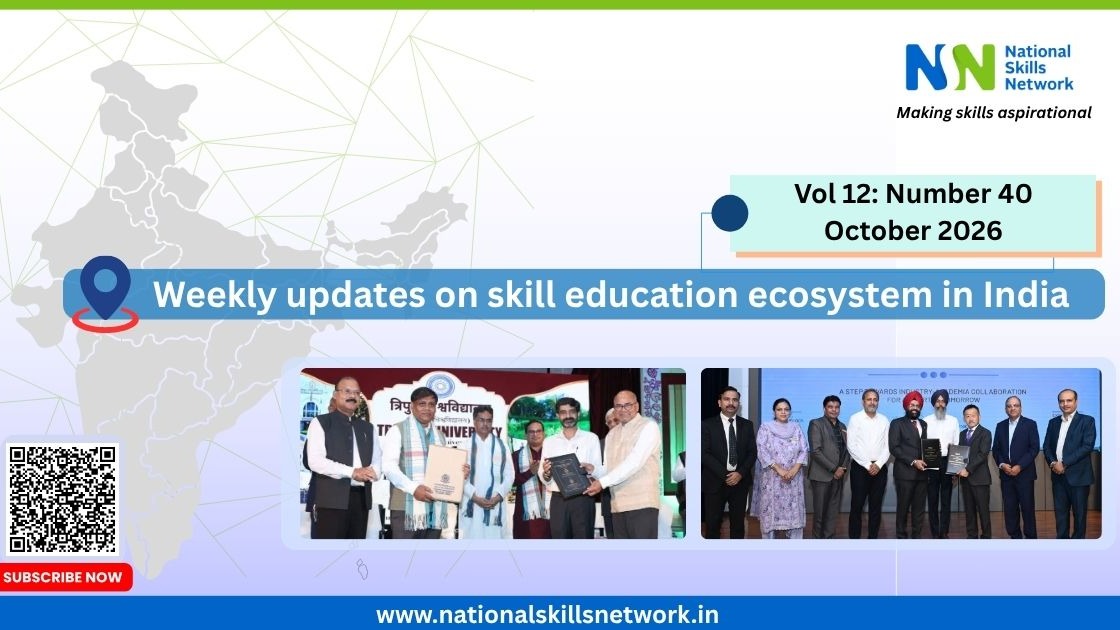
  • This week, we visited Central Institute of Petrochemicals Engineering & Technology (CIPET) CSTS Hyderabad, as part of our ongoing effort at NSN to explore institutions that are building specialised skills for India
  • Tools for Applied Learning in Secondary Schools - explained in Bengali!As schools increasingly focus on skill-based education, vocational learning and experiential approaches under NEP 2020, applied learning is becoming an important part of school education.Watch this video in Bengali, explained by Mr. Sudip Chakraborty to understand the Applied Learning Toolkit and how it can support teachers, school leaders and trainers in implementing more practical and skill-based learning approaches.Watch the video here: https://youtu.be/D69XlSQJWTc?si=YMUxCUVhOtuFdbeX#appliedlearning #education #toolkit #teachers #schools #tafe #NEP2020
  • Announcing the 2nd edition of Bengaluru Skill Summit
Hon’ble Minister Dr. Sharanaprakash Rudrappa Patil, Minister for Skill Development, Entrepreneurship and Livelihood & Medical Education, Government of Karnataka, announces the 2nd edition of the Bengaluru Skill Summit.
Building on the success of the inaugural edition in 2025, the Summit has emerged as a powerful platform uniting industry, academia, policymakers, and youth to shape the future of skills.
📅 3–5 November 2026
📍 The Lalit Ashok, Bengaluru
This year, the focus is on strengthening industry collaboration, expanding global opportunities, and accelerating Karnataka’s vision of a future-ready workforce.
👉 Click here to join the movement and register: https://nationalskillsnetwork.in/karnataka-bengaluru-skill-summit-2026/
#BengaluruSkillSummit #SkillingIndia #FutureOfWork #Karnataka #SkillKarnataka
  • Women are increasingly participating in the gig economy through online freelancing, platform work, and digital services.Along with new opportunities, they also face unique challenges related to access, affordability, safety, visibility, and career growth.How can mentorship, peer learning, and community support help women navigate these challenges and build sustainable careers?This conversation explores the importance of trust, role models, inclusive support systems, and mentorship in empowering women gig workers and freelancers.Read more: https://nationalskillsnetwork.in/mentorship-learning-women-gig-workers/#womengigworkers #gigeconomy #mentorship #womenfreelancers #gigwork #gigjobs
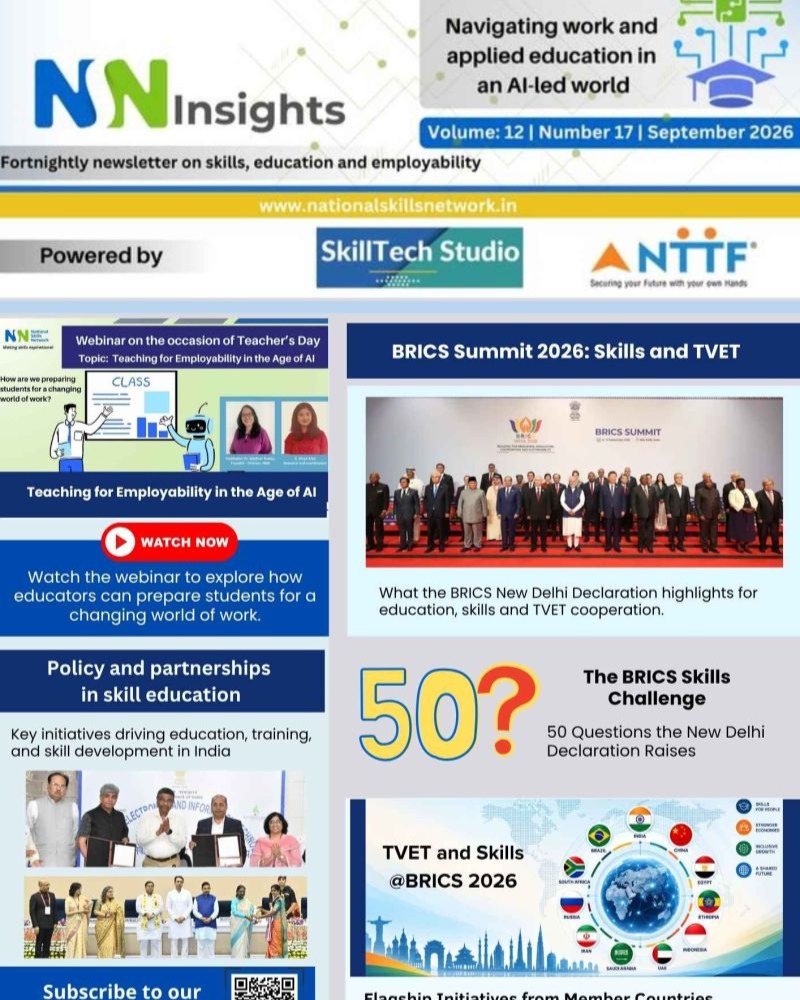
  • The latest edition of NSN Insights explores important conversations shaping education, skilling, and the future workforce in India.This edition covers:🔹 India-centric multimodal AI systems and entry-level AI roles
🔹 Applied learning tools for secondary schools
🔹 AI quiz and learning resources
🔹 Repositioning ITIs and technical education for Gen Z
🔹 Weekly updates from the skill development and education ecosystemRead the latest edition here: https://sendy.nationalskillsnetwork.in//w/ehKjeXSLBTvEk1Ca7S763Few#skilldevelopment #artificialintelligence #appliedlearning #ITI #Education
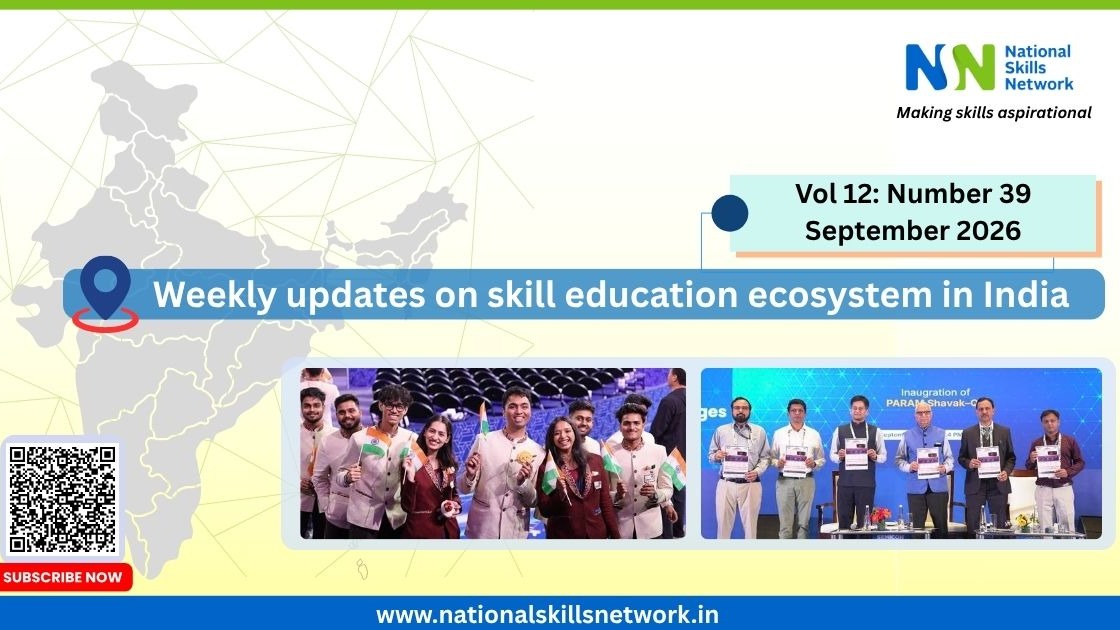
  • This week’s developments across India’s skilling ecosystem highlight growing momentum in AI integration, semiconductor training, AVGC creative skills, industry partnerships and workforce readiness initiatives.From 5G labs for ITI students and EV technology courses to AI teacher training, vocational curriculum reforms and future-focused skilling programmes, institutions, industries and governments continue to strengthen pathways for employability and innovation.Explore the latest updates in this week’s NSN Newsbytes: https://nationalskillsnetwork.in/newsbytes-skill-education-26-may-2026/#skilldevelopment #CSR #AI #highereducation #ITI #academia #employability
  • Tools for applied learning in secondary schools - explained in Telugu!As schools increasingly explore more practical, skill-based and experiential approaches to learning under NEP 2020, applied learning is becoming an important part of school education.Watch this video in Telugu to understand the Applied Learning Toolkit developed through the Australia–India Institute collaboration and how it can support teachers and schools in implementing applied learning approaches.Watch the video here: https://youtu.be/5dxNUjsaHvU?si=piwDLOss2bdA_qCb#appliedlearning #education #toolkit #teachers #schools #tafe #NEP2020
  • State-led developments in skills and employability across IndiaStates across India continue to strengthen skilling, digital learning and industry-aligned education through new AI initiatives, deep-tech training programmes, higher education reforms and workforce development partnerships.From emerging technologies and innovation-led learning to inclusive education and employability-focused initiatives, the latest developments reflect growing momentum toward future-ready skills across regions.Read the full updates in this week’s edition here: https://nationalskillsnetwork.in/newsbytes-on-skill-education-19-may-2026/To feature a skill development initiative from your state, reach out to us at NSN.
Subscribe to stay updated with weekly insights on India’s evolving skilling ecosystem.
  • What happens when AI systems are trained on data that does not fully reflect India’s realities?From languages and cultural nuances to local environments and behavioural patterns, much of India still remains underrepresented in global AI datasets.This is where multimodal AI is beginning to change the conversation. By combining images, text, audio, and environmental signals, it moves AI closer to contextual understanding rather than isolated processing.The article explores how IIT Mandi’s Multimodal AI Lab is working toward building AI systems through data from India, with a strong focus on data ingestion, synchronization, and creating representative AI ecosystems grounded in Indian contexts.Click here to read more: https://nationalskillsnetwork.in/iit-mandi-multimodal-ai-lab-data-india/#MultimodalAI #AIinIndia #IITMandi #artificialintelligence #AIinnovation #humansintheloop #datalabelling

About us

National Skills Network (NSN) captures and shares the positive impact of various training, skill development and vocational education initiatives in India.

To know more about Our Team: Click here

Address

NSN Digital Solutions Pvt. Ltd.
CIN: U74999TG2020PTC147299
MSME: UDYAM-TS-09-0086473
Gachibowli, Hyderabad – 500032

Email us: contact@nationalskillsnetwork.com

Important Links

  • Conversations
  • Perspectives
  • News
  • Skill Development e-Magazine
  • Resources
  • Our Team
  • Our Clients
  • Partner with us
  • About us
  • Advertise with us
  • Content Disclaimer
  • Privacy Policy

© 2026 National Skills Network Content licensed under CC BY-ND 4.0. Commercial use requires permission.

loader
No Result
View All Result
  • Home
  • Conversations
    • Industry Conversations
    • All Conversations
  • Perspectives
    • Education
      • Higher Education
      • School Education
    • Emerging Technologies
      • AI Skills and Education
    • Government Initiatives
    • Industry
    • Industrial Training Institutes (ITIs)
    • NEP 2020
    • Skill Training
  • News
    • Latest Updates
    • News Archives
    • CSR and ESG in Skill Education
    • Skill Development e-Magazine
    • NSN PDF Newsletter Archives
  • Videos
    • Explainers
    • Panel Discussions
    • Student Stories
    • Video Conversations
  • Resources
    • Apprenticeship
    • e-Books
    • Resources
    • Success Stories
  • Events
    • Workshops
  • About us
    • Our Team
    • Our Clients
    • Our Services
    • Privacy Policy

© 2026 National Skills Network Content licensed under CC BY-ND 4.0. Commercial use requires permission.