NSN
  • Home
  • Conversations
    • Industry Conversations
    • All Conversations
  • Perspectives
    • Education
    • Emerging Technologies
    • Government Initiatives
    • Industry
    • Industrial Training Institutes (ITIs)
    • NEP 2020
    • Skill Training
  • News
    • Latest Updates
    • News Archives
    • CSR and ESG in Skill Education
    • Skill Development e-Magazine
    • NSN PDF Newsletter Archives
  • Videos
    • Explainers
    • Panel Discussions
    • Student Stories
    • Video Conversations
  • Resources
    • Apprenticeship
    • e-Books
    • Resources
    • Success Stories
  • Events
    • Workshops
  • About us
    • Our Team
    • Our Clients
    • Our Services
    • Privacy Policy
No Result
View All Result
NSN
  • Home
  • Conversations
    • Industry Conversations
    • All Conversations
  • Perspectives
    • Education
    • Emerging Technologies
    • Government Initiatives
    • Industry
    • Industrial Training Institutes (ITIs)
    • NEP 2020
    • Skill Training
  • News
    • Latest Updates
    • News Archives
    • Skill Development e-Magazine
    • NSN PDF Newsletter Archives
  • Resources
    • Apprenticeship
    • E-books
    • Resources
    • Success Stories
  • Events
    • Workshops
  • About us
    • Our Team
    • Our Clients
    • Our Services
    • Privacy Policy
NSN
No Result
View All Result
Home Conversations

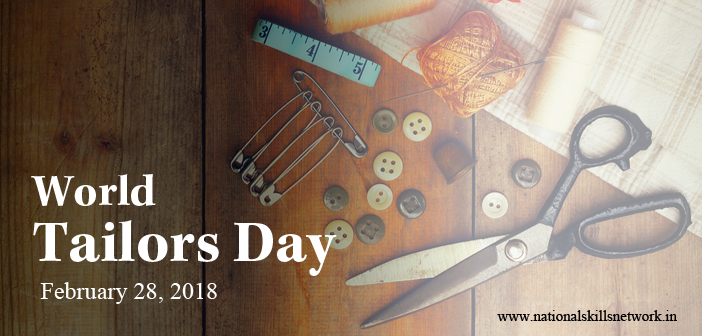
World Tailor’s Day 2018: The machine that revolutionized an industry

Guest Author by Guest Author
February 28, 2018
Reading Time: 5 mins read
A A
0

Picture this. 32 year old Shilpa, a tailor from Hosur and mother of two school going children, wakes up at 6 am and hurriedly prepares her children’s breakfast and packs their tiffin boxes. After the children leave for school, Shilpa finishes the rest of her housework and rushes to her garment unit close to her home. There, she works on bulk orders received from schools and larger garment units in Hosur. Her factory has a strength of 20 women tailors who operate on industrial sewing machines to deliver orders to clients on a regular basis, working in flexible working hours to manage work-life balance. When workload increases during peak season, Shilpa hires few more self-employed tailors to manage on-time delivery. In a month, the unit makes around 1-2 lakhs which has turned its business into a sustainable one.

Imagine what would have been the situation before the sewing machine came into existence? Could Shilpa and her small team of tailors have managed to deliver such bulk orders within a short period of time? It would have actually taken the entire community to cut and sew so many garments, let alone deal with quality and standardization issues in the absence of a standard sewing machine. Needless to say, the apparel and textile industry would not have been what it is today had it not been for the standardised lock-stitch sewing machine with eye-pointed needle invented and patented by Sir William Elias Howe in 1846 that was later perfected with the invention of other accessories and better working models over time, especially the one patented by Isaac Singer.

On the occasion of World Tailor’s Day celebrated on 28th February every year to mark the birth anniversary of Elias Howe Jr, let us understand how the sewing machine shaped the apparel industry and gave jobs to millions across the world.

World Tailors Day 2018Liberating the toiling women of the apparel industry
Most of the sewing dating back in the olden days were carried out at home although few shops offered made-to-order tailoring services in small shops. Bespoke tailoring for noblemen and ladies involved the role of more than one tailor. While men usually took orders and measurement as well as cut the fabric as per the requirement, it was women who had to stitch the entire garment with their hands. It was a lowly paid job that needed hours of hard work. Women used to be bent on their stitching all day long to receive their meagre daily wage based on the amount of work they could complete.

With the advent of the sewing machine, women could actually find employment in bigger garment factories with better working conditions and pay. Work got standardised and so did their wages. Quality garments could be mass produced at a much lower cost, thereby reducing the cost of individual garments and making them pocket-friendly for masses. Ready-to-wear clothes found their place among the ranks of military and civilians alike.

Varalakshmi skilled tailor“I work on hourly basis at a garment unit in my locality. I make almost Rs.8000 in a month stitching school uniforms, women’s ethnic wear and children’s garments. Of course I received training from LabourNet to handle the demands of modern tailoring and industrial tailoring machines.” Varalakshmi, Tailor, Hoskote, Karnataka
‘Bespoke’ tailoring for the masses

Sewing machine became the magic tool for standardizing garment production, creating garments of all sizes and reducing turnaround time of each garment. Over time, this also brought neatly tailored clothes to the houses of the common man, freeing the time of the women in the house who could afford to purchase clothes from stores instead of slogging for hours at home. When Singer machines reached the poor masses with the introduction of instalment schemes, women could also afford to sew their own clothes with these machines without much toil.

Today, with very little investment and skill training, tailors can set up a sewing machine in their homes and start generating income to support their family.
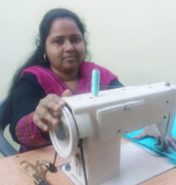
Seema skilled tailor“My husband, a construction painter, works on daily wage and his work is seasonal. It was difficult for me to run a family that comprise of two growing children. I took tailoring training from LabourNet and purchased a machine by taking a small loan. Now, I am able to support my family with a monthly steady income from tailoring work.” Seema Chavan, Self-employed tailor, Pune, Maharashtra

Instilling entrepreneurship for livelihood enrichment

In the modern times, consumerism has reached its peak due to the higher spending power of the middle class. The fashion conscious mass has woken up to the offerings of brands that have seized the opportunity and begun to sell quality attire in all sizes at reasonable prices by the bulk. This has also opened doors for micro enterprises to produce high quality garments on mass scale using industrial sewing machines and supplying them to these brands. In India, the textile and apparel industry has always witnessed a large share of women in total employment. Unfortunately, the bargaining power of these women to negotiate better wages or position have been dismal due to lack of financial knowledge and their labour rights.
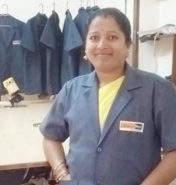
Shilpa skilled tailor“As a young girl, I used to stitch clothes and earn my pocket money. However, I could have never dreamt of running my own garment unit without LabourNet’s help. I am now able to do business development as well as deliver quality products on time while maintaining the accounts and managing the workers involved in the production of garments. It used to be overwhelming, but now I am able to manage it well. This is a perfect profession for me.”  Shilpa, garment unit owner, Hosur, Tamil Nadu

For women like Shilpa, demand of brands for locally produced garments to keep costs low has given the much needed boost to start something on their own by bringing the community together under one platform of livelihood enablement. However, without the right knowledge to take business forward and lift it to a sustainable level, any individual is ill-equipped to handle such a task. LabourNet has come to the rescue of small-time unskilled and semi-skilled tailors in many rural and semi-urban localities across India by giving proper skill training aligned to their trade and mentoring them to start small businesses of their own. Shilpa’s garment unit is the outcome of one such venture that was taken up in Hosur, Tamil Nadu. Shilpa and other women in the locality were trained to work on modern tailoring units, followed by hand-holding and incubation of one such unit until it turned into a sustainable enterprise.

Reskilling seasoned tailors in modern industry practices

Prabhat skilled tailor“The Recognition of Prior Learning program conducted by LabourNet has been an eye-opener for me. Although I have been a tailor for more than 30 years and associated with a big brand, the program has given me an insight in customer management and soft skills, necessary to woo new generation customers. Even bespoke tailoring demands impeccable customer service etiquette to understand the need and desire of the customer.” Prabhat, Master Tailor

The future of an industry depends on the ability of its stakeholders. To ensure a steady and consistent growth of the textile & apparel industry, it is essential to take the tailoring assistants and Master tailors to the next level by understanding the skill gap and orienting them in the latest industry trends. LabourNet has partnered with well-known brands to train and certify their master tailors in order for them to drive growth in the industry.

While it all started with the invention of the sewing machine, it is for the new generation to continue to evolve and take the industry to new heights.

Contributed by Guest Author: Dr Gayathri Vasudevan, CEO, LabourNet Services Pvt Ltd

RelatedPosts

66 Years of NTTF: Nation building through industry-ready talent

Aligning Skills, Education and Industry Needs in the BFSI Sector

DIDAC India and DIDAC Skills 2025: Driving Industry-Ready Education

Tags: apparel industry skillsbespoke tailorsLabourNet tailoring skills coursesNSDC apparel skill coursesself employment through tailorswomen tailor entrepreneursWorld Tailor's Day 2018
ShareTweetShareSummarizeSummarize
WhatsApp Join our WhatsApp channel for more updates:
WhatsApp Join Now!
YouTube Subscribe to our YouTube channel for more updates:
YouTube Subscribe Now!
Previous Post

Agriculture Skill Council of India (ASCI) partners KUFOS for skilling in Fisheries

Next Post

TASK and HYSEA Partnership successfully concludes iMake (Maker Space) program

Guest Author

Guest Author

Next Post
TASK iMake skills program1

TASK and HYSEA Partnership successfully concludes iMake (Maker Space) program

Leave a Reply Cancel reply

Your email address will not be published. Required fields are marked *

No Result
View All Result
samplead3 samplead1

Subscribe to our e-Magazine

Trending Topics

skilling in India (131) National Skill Development Corporation - NSDC (127) skill development news India (125) skill development (114) Ministry of Skill Development and Entrepreneurship MSDE (101) vocational education (95) Apprenticeships (86) skill development news (80) skill development programs (70) Nettur Technical Training Foundation (NTTF) (68)

Follow us

  • The Furniture and Fittings Skill Council (FFSC) concluded the 8th batch convocation of its 3-month short-term skill development program at the FFSC Centre of Excellence, located at NSTI Vidyanagar, Hyderabad, on 23rd December 2025, with support from Greenpanel Foundation.The program recognised participants from diverse educational and professional backgrounds who successfully completed the training.Designed as an industry-aligned initiative, the program focused on building practical, job-ready skills across furniture manufacturing, installation, and interior fit-out roles, supported by industry interaction and placement engagement. The initiative reflects the role of focused short-term training in strengthening workforce readiness in the furniture and allied sectors.Read more: https://nationalskillsnetwork.in/ffsc-skill-program-nsti-hyderabad/#FFSC #SkillDevelopment #ShortTermTraining #FurnitureSector #NSTI #productdesign #design
  • A year to practice.
A year to learn.
A year to grow.As we move into 2026, we at NSN, extend our sincere gratitude for your continued support and collaboration, which have contributed significantly to our shared progress and growth.May the skills you build this year help you move forward with confidence, resilience, and purpose. Stay focused, keep practising, and remember, progress comes one step at a time.You may print and use this pin-up calendar as a year-long reminder of the skills that help you learn, adapt, and grow.Wishing you all a very Happy New Year 2026!
- Team NSN
  • Latest State-led skilling initiatives across IndiaAs 2025 draws to a close, states across India continue to translate policy intent into action; strengthening vocational education, work-integrated learning, teacher capacity, industry partnerships, and inclusive skilling pathways.From NEP-aligned school reforms and large-scale ITI upgradation to apprenticeships, healthcare skilling, digital competencies, and youth skill competitions, these initiatives reflect a strong on-ground push towards employability, workforce readiness, and future-ready skills.These initiatives capture how states are building resilient skill ecosystems; laying the foundation for a stronger, more inclusive skilling momentum in 2026.Read more: https://nationalskillsnetwork.in/newsbytes-skills-education-30-dec-2025/
  • A Recap of Key Government Events and Initiatives at the Central and State LevelsIndia’s skilling ecosystem saw significant momentum in 2025, driven by key government-led events and initiatives at both the central and state levels. From national policy reforms and flagship programmes to state-led skill summits and institutional upgrades, the year reflected a strong focus on industry alignment, inclusion, future skills, and employment-linked outcomes.In Part 2 of the NSN 2025 Year in Review, we bring together a curated recap of the major government actions that shaped workforce development across regions and sectors.Read more: https://nationalskillsnetwork.in/year-in-review-2025-part-2/#SkillDevelopment #GovernmentInitiatives #FutureSkills #education #WorkforceDevelopment
  • This week’s NSN Weekly Newsbytes captures key developments shaping skill development and education across the country, from the PM-SETU EOI for industry partners and ITI modernisation, to AI, deeptech and emerging technology training, growing industry–academia partnerships, and CSR-led skilling initiatives reaching underserved youth and women.These updates reflect a coordinated push by government, industry, academia, and CSR stakeholders to build a future-ready, inclusive workforce aligned with Vision 2047.Read more: https://nationalskillsnetwork.in/newsbytes-skills-education-23-dec-2025/#SkillDevelopment #PMSETU #ITIReforms #AISkilling #CSR
  • Conversations around international projects in skill education, industry-ready talent, AI-ready universities, and skills over degrees continue to shape the future of learning and work.Explore insights on 66 years of NTTF, international collaborations, Australia–India dual-sector education, and new approaches to future skills at scale.Read more in the latest edition of The Skill Times: https://sendy.nationalskillsnetwork.in//w/DYhueqF8RTX892b4TRGCNqPw#SkillDevelopment #HigherEducation #FutureSkills #AISkilling #IndustryAcademia #InternationalCollaboration #OnlineFreelancer #Toolkit
  • Team NSN wishes you all a Merry Christmas 🎅 🎄#Christmas #merrychristmas #cʜʀɪsᴛᴍᴀs2025
  • NSN 2025 Part 1: A Defining Year for India’s Skilling EcosystemAs we close the chapter on 2025, its is clear that India’s approach to skills, learning, and employability has evolved like never before. At National Skills Network (NSN), this year was about decoding change, amplifying insights, and spotlighting the initiatives shaping the future of work.From competency-based learning frameworks and reimagined assessments to school-to-career pathways, 2025 brought sharper clarity on what meaningful education looks like. Classrooms became more hands-on, industries deepened collaboration with institutions, and technology accelerated learning outcomes.We explored:
- Assessment as, for, and of learning
- NSQF reforms enabling flexible career pathways
- Apprenticeships as strategic employability routes
- Skill-based education and early career awareness in schools
- Emerging sectors like green energy and FinTech
- The shift from Generative AI to Agentic AI and its impact on workBeyond insights, we highlighted future-ready programs redefining skill delivery:
- AI-powered digital marketing education
- Industry-integrated short-term training programs
- Faculty development for technical education
- Hands-on STEM learning through SkillTech StudiosOur fortnightly e-magazine, The Skill Times, continued to share stories of impact, innovation, and collaboration across India’s skilling ecosystem.If this resonates, like, share, and join the conversation.Here’s to building skills, shaping futures, and creating impact in 2026! 🌟You can read more through the links in our Story Highlights and in our Bio 💻
  • 👨‍🎓 Unlock your career potential!In this video, Dr. Madhuri Dubey chats with Ms. Sayanti Adhikari from AISECT Group of Universities about the Young Professionals Employability Program (YPEP).It

About us

National Skills Network (NSN) captures and shares the positive impact of various training, skill development and vocational education initiatives in India.

To know more about Our Team: Click here

Address

NSN Digital Solutions Pvt. Ltd.
CIN: U74999TG2020PTC147299
MSME: UDYAM-TS-09-0086473
Gachibowli, Hyderabad – 500032

Email us: contact@nationalskillsnetwork.com

Important Links

  • Conversations
  • Perspectives
  • News
  • Skill Development e-Magazine
  • Resources
  • Our Team
  • Our Clients
  • Partner with us
  • About us
  • Advertise with us
  • Content Disclaimer
  • Privacy Policy

© 2026 National Skills Network Content licensed under CC BY-ND 4.0. Commercial use requires permission.

loader
No Result
View All Result
  • Home
  • Conversations
    • Industry Conversations
    • All Conversations
  • Perspectives
    • Education
    • Emerging Technologies
    • Government Initiatives
    • Industry
    • Industrial Training Institutes (ITIs)
    • NEP 2020
    • Skill Training
  • News
    • Latest Updates
    • News Archives
    • CSR and ESG in Skill Education
    • Skill Development e-Magazine
    • NSN PDF Newsletter Archives
  • Videos
    • Explainers
    • Panel Discussions
    • Student Stories
    • Video Conversations
  • Resources
    • Apprenticeship
    • e-Books
    • Resources
    • Success Stories
  • Events
    • Workshops
  • About us
    • Our Team
    • Our Clients
    • Our Services
    • Privacy Policy

© 2026 National Skills Network Content licensed under CC BY-ND 4.0. Commercial use requires permission.